- One Stop for all Business Utilities
- (0800) 999-1160
- quotes@betaenergydirect.com

October Price Cap Jumps 4%: What It Means for Commercial Energy Indirectly

The 25% Spike: How Geopolitical Tensions and Shifting Levies Reshaped Business Energy in 2026
September 5, 2026
UK Businesses Urge Budget to Cut Energy Levies
September 15, 2026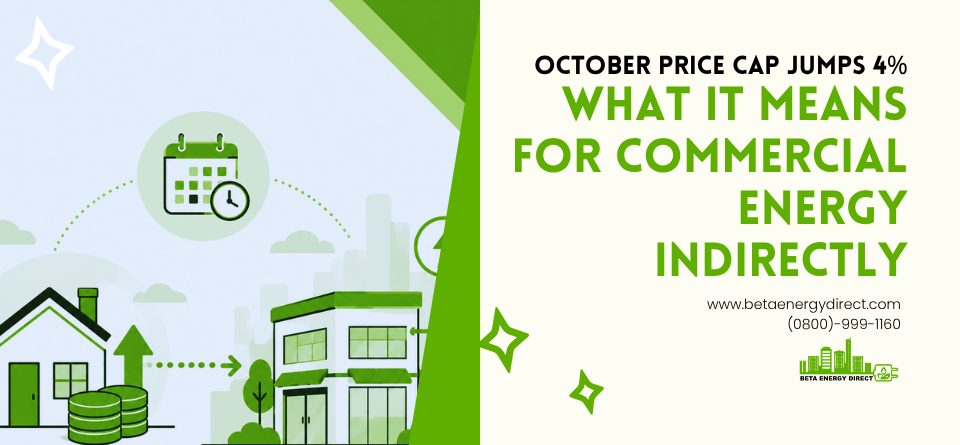
October Price Cap Jumps 4%: What It Means for Commercial Energy Indirectly
On 26 August 2026, Ofgem confirmed that the household energy price cap will rise by 4% from 1 October, taking the typical annual dual-fuel bill from £1,663 to £1,723. It’s the second consecutive quarterly rise, and the third increase of the year overall. Ofgem points the finger squarely at wholesale gas prices, which have climbed to a three-year high as conflict between the US and Iran continues to disrupt global energy markets.
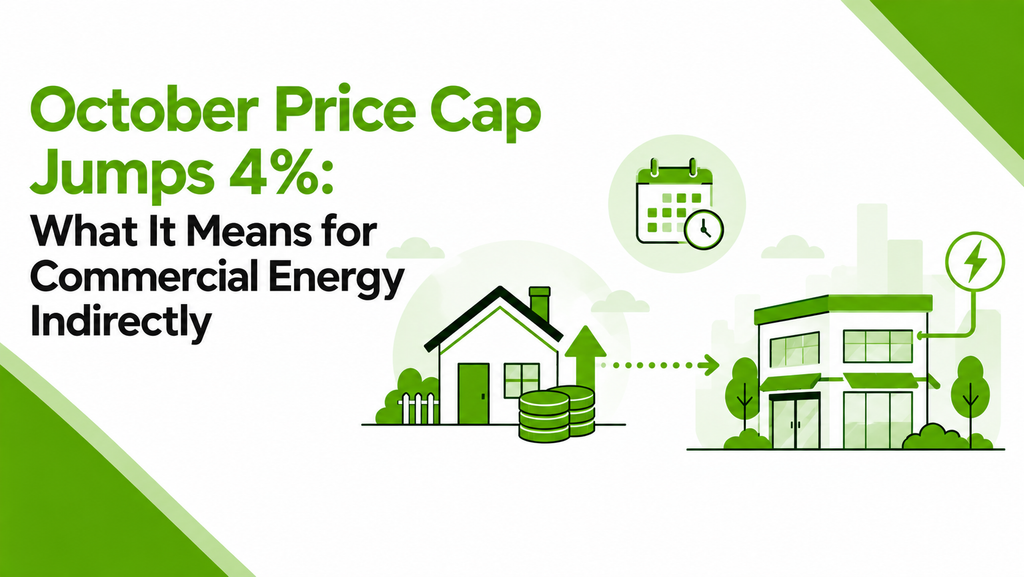
Here’s the part most business owners skim past: the price cap only applies to households. So why does an October announcement about domestic bills deserve a second look from anyone running a UK SME? Because the same forces pushing household bills up are already sitting inside every commercial energy quote your business will see this winter — they just arrive with less fanfare and no headline percentage attached. This article walks through exactly how that connection works, what the October rise tells you about where commercial rates are heading, and what to actually do about it before January.
What Ofgem Actually Announced
The Numbers
From 1 October to 31 December 2026, the household price cap rises to £1,723 a year for a typical direct debit customer, up £60, or about £5 a month. That’s a 4% increase on the July-to-September cap of £1,663. Around 22 million households on default tariffs are covered by the cap; roughly 11 million households already locked into fixed deals won’t feel it at all until their own contracts end.
Why It’s Going Up
Ofgem’s Director General for Markets, Neil Kenward, was blunt about the cause: high international gas prices, driven by ongoing volatility in the Middle East, continue to be the dominant force behind UK energy costs. Gas bills specifically are rising by around 8% under the new cap, while electricity-only costs are barely moving, which tells you almost everything about where the pressure is actually coming from — it’s a gas story, not an electricity one.
One piece of good news sits inside this announcement: the government has removed VAT from domestic electricity bills from October 2026 through to March 2027, a step Ofgem says kept the increase roughly £45 lower than it would otherwise have been. That relief, worth noting, applies to households — not to commercial electricity accounts.
This Is the Second Rise in a Row
Context matters here. The July cap rose 13.5%. October adds another 4% on top. That’s two consecutive increases heading straight into the coldest months of the year, and industry analysts including Cornwall Insight are already flagging further rises for the January 2027 cap period, with worse potentially still to come.
Why a Domestic Price Cap Announcement Matters to Your Business Energy Bill
This is the bit worth sitting with for a moment, because it trips up a lot of business owners.
The Ofgem price cap is a consumer protection mechanism. It caps what suppliers can charge households on standard variable tariffs. It has never applied to business energy, and it isn’t going to start now. Your commercial electricity and gas contract sits entirely outside its scope.
And yet, every time the cap moves, commercial rates tend to move with it — just quietly, and without a press release. Here’s why.
The Same Wholesale Market Sets Both Prices
Ofgem’s cap is recalculated every quarter based on the wholesale cost of gas and electricity over a defined reference period. Business energy suppliers price their contracts off exactly the same wholesale market. When gas prices spike because of Middle East conflict, that spike doesn’t check whether the buyer is a household or a hairdressing salon — it shows up in supplier pricing models for both.
The Cap Is a Public Signal of Where the Market Actually Stands
Because household energy news gets far more media coverage than commercial energy news, the quarterly cap announcement functions as the most visible, most widely reported snapshot of underlying market conditions. When Ofgem says wholesale gas hit a three-year high, that’s a direct read on the same market your next business gas quote will be priced against — you just won’t see it phrased that way on your renewal letter.
Some Businesses Sit on Domestic Tariffs Directly
Sole traders working from home, businesses run from domestic premises, and very small operations sometimes end up billed on genuinely domestic meters and tariffs. For that group, the cap doesn’t just signal something indirectly — it applies to them exactly the way it applies to any household.
Micro-Business Protections Echo the Same Logic
Ofgem’s Microbusiness Strengthened Protections require suppliers to treat businesses with fewer than 10 employees fairly around contract terms, back-billing, and switching rights. While these protections don’t cap the unit price a micro-business pays, they exist because Ofgem recognises that the smallest commercial customers face similar market power imbalances to households — which is exactly the population most exposed when wholesale costs climb the way they have this year.
What the Two Consecutive Rises Tell You About Commercial Rates This Winter
Reading between the lines of two back-to-back cap increases gives you a reasonably clear picture of what’s coming for business energy contracts over the next few months.
Wholesale Gas Pressure Isn’t Easing
The consistent message across Ofgem, Uswitch, and the Energy and Climate Intelligence Unit is the same: US-Iran conflict is keeping wholesale gas elevated, and there’s no clear resolution in sight. Businesses hoping wholesale prices would settle back down through 2026 are watching that assumption get harder to justify with each quarterly announcement.
Winter Demand Will Add Further Strain
Gas demand always climbs in winter as heating load increases across the country. Layer rising winter demand on top of already-elevated wholesale prices, and the conditions are lining up for exactly the kind of squeeze that tends to hit businesses renewing contracts between October and February hardest.
January’s Cap Is Already Being Flagged as a Concern
Cornwall Insight’s own commentary alongside the October announcement points directly to further bill rises expected in January. If that forecast holds, it suggests wholesale pressure isn’t a one-quarter blip — it’s a trend businesses should be planning around, not waiting out.
Out-of-Contract Rates Get More Expensive, Not Less
If your business energy contract has already lapsed, you’re sitting on a deemed or out-of-contract rate — typically 30% to 70% higher than a fixed deal already. Rising wholesale costs give suppliers more room to keep those default rates high, since there’s no cap forcing them down the way there is for domestic customers.
What UK SMEs Should Actually Do Right Now
1. Treat This as a Genuine Signal, Not Background Noise
Two consecutive cap rises, both explicitly attributed to wholesale gas pressure, is a stronger signal than either increase on its own. If your renewal is coming up in the next few months, this is a reasonable moment to take the market seriously rather than assume prices will settle.
2. Fix Before Winter Demand Fully Kicks In
Suppliers price in seasonal risk ahead of time. The window to lock in a rate before winter demand and further wholesale pressure get fully baked into new quotes tends to close as the season progresses, not open.
3. Check Whether You’re Already Out of Contract
If your fixed term has lapsed, you’re already paying the most expensive rate your supplier offers, and rising wholesale costs only make that gap wider. This is usually the fastest saving available to a business, and it comes with no exit penalty.
4. Compare Gas and Electricity Independently
Given that this particular price pressure is overwhelmingly a gas story — gas bills rose 8% under the new cap while electricity barely moved — it’s worth getting a dedicated gas comparison rather than assuming a bundled dual-fuel deal is pricing that in fairly.
5. Don’t Wait for a January Cap Announcement to Act
By the time the January cap figure is public, the wholesale pricing behind it has already been locked in for weeks. Businesses that wait for confirmation before comparing the market are, by definition, comparing after the fact.
How Beta Energy Direct Helps SMEs Read the Market Correctly
At Beta Energy Direct, based in Manchester and working with SMEs and corporates across the UK, one of the most valuable things we do isn’t finding you a supplier — it’s translating what’s actually happening in the wholesale market into a plain-English answer to the question every business owner really wants answered: should I fix now, and if so, for how long?
Our approach gives you:
- Effortless comparison of live business energy tariffs across the whole market
- Dedicated, qualified staff who track wholesale trends so you don’t have to
- Best prices guaranteed on the deals we recommend
- Less paperwork and quicker approvals, so acting on market signals doesn’t turn into another delayed task
If the October cap rise has made you wonder what’s actually happening to your own business energy costs, get a free quote and we’ll benchmark your current rate against where the market genuinely stands today.
Widen the Review While You’re At It
A winter energy squeeze is a natural prompt to check the rest of your utilities stack too. Many SMEs we speak with about energy end up reviewing their business water contracts, broadband and telecom arrangements, or business finance options at the same time, simply because a market check on one utility tends to reveal how long it’s been since the others were compared too.
Frequently Asked Questions
Does the October 2026 price cap rise apply to business energy?
No. Ofgem’s price cap applies only to domestic households on default or standard variable tariffs. Business energy is unregulated in terms of unit pricing, though the same wholesale gas market that drives the cap also drives commercial contract pricing.
Why did the price cap go up again in October?
Ofgem attributes the 4% rise mainly to higher wholesale gas prices, driven by ongoing conflict between the US and Iran, which has pushed global gas markets to a three-year high. Gas bills rose around 8% under the new cap, while electricity costs were largely unaffected.
Will business energy prices rise because of this too?
There’s no automatic link, but business energy suppliers price contracts off the same wholesale gas and electricity markets Ofgem uses to set the domestic cap. Rising wholesale costs typically feed through to new and renewing commercial contracts over time, even without a formal cap in place.
Is it worth fixing my business energy contract before winter?
Given two consecutive cap rises and forecasts pointing to a further increase in January, many businesses are choosing to lock in fixed rates now rather than risk renewing later in the season when wholesale pressure and winter demand may have pushed prices higher still.
What happens if my business energy contract has already lapsed?
You’ll be on a deemed or out-of-contract rate, typically 30% to 70% higher than a fixed deal, with no exit penalty for switching. Rising wholesale costs make this gap wider, not smaller, which makes it one of the fastest savings opportunities available right now.
Where can I check the latest price cap figures?
Ofgem publishes official price cap updates at ofgem.gov.uk. For a read on how these trends apply specifically to your business, request a free energy comparison from Beta Energy Direct.
Read the Signal Before Winter Makes the Decision for You
The October price cap rise won’t show up on a single UK business invoice directly, but it’s telling you something real about the market your own energy contract is priced against. Two consecutive increases, both driven by the same wholesale gas pressure, is exactly the kind of signal worth acting on before winter demand and further volatility make the decision more expensive for you.
Call Beta Energy Direct on (0800) 999-1160 or request your free energy comparison today, and find out what the wholesale market is really doing to your business energy costs this winter.