- One Stop for all Business Utilities
- (0800) 999-1160
- quotes@betaenergydirect.com

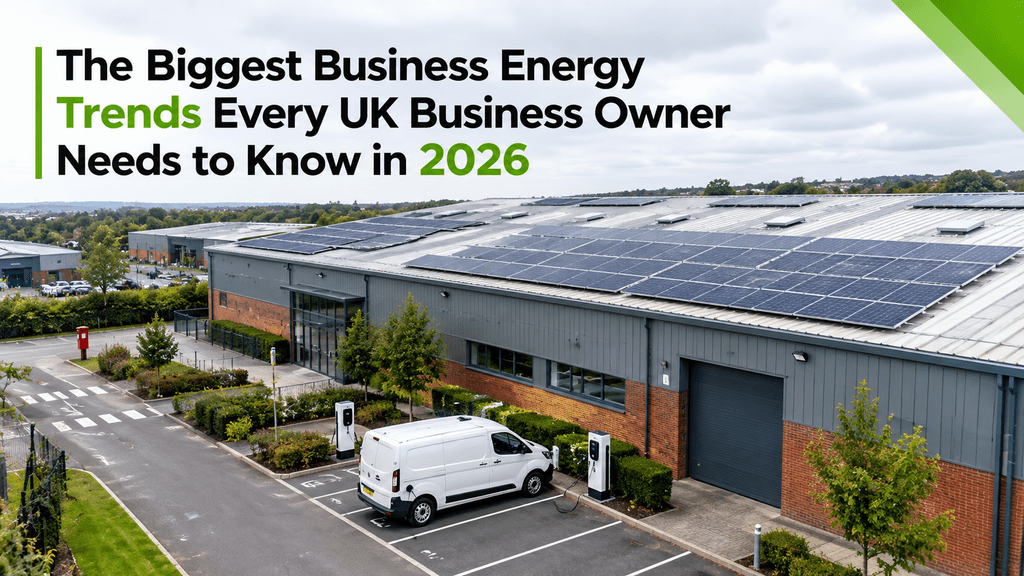
The Biggest Business Energy Trends Every UK Business Owner Needs to Know in 2026

UK Businesses Urge Budget to Cut Energy Levies
September 15, 2026
UKPN Using AI Analysis of Businesses’ Meter Readings to Map Local Demand
September 24, 2026
Biggest UK Business Energy Trends 2026: What to Know Now
Energy stopped being a background overhead for UK businesses somewhere in the last twelve months. It’s now a board-level topic, a genuine driver of investment decisions, and, for a growing number of businesses, a strategic variable that affects margins, resilience, and long-term planning in ways it simply didn’t a few years ago. Grid electricity now costs commercial consumers somewhere between 20p and 35p per kWh, and there’s little credible evidence prices will fall meaningfully any time soon.
If you run a UK SME, you don’t need convincing that energy costs have changed. What’s harder to keep track of is exactly what’s driving those costs, which trends are genuinely reshaping the market versus which are just noise, and what you can actually do about any of it. This article pulls together the trends that matter most right now, from network charges and policy debates to the quiet rise of on-site generation, so you’re working from the full picture rather than whatever happened to make the news this week.
1. Network Charges Are Now a Bigger Story Than Wholesale Prices
For years, “energy costs” meant wholesale gas and electricity prices. That’s no longer the whole story, and arguably not even the main one.
TNUoS Charges Have Risen Sharply
Transmission Network Use of System (TNUoS) charges — the cost of maintaining and expanding the UK’s high-voltage transmission network — rose by more than 60% from April 2026, under the first year of Ofgem’s new RIIO-ET3 price control period. Because most of this increase lands on standing charges rather than usage-based rates, it hits every business connected to the grid, regardless of how much electricity that business actually consumes.
Non-Commodity Costs Now Dominate the Bill
Network charges, environmental levies, balancing costs, and supplier margin — collectively known as non-commodity costs — now account for somewhere between 60% and 64% of a typical UK business electricity bill, depending on the analysis you look at. Wholesale energy, the actual commodity cost of gas or electricity, has become the minority component of what most businesses pay. That’s a fundamental shift, and it means efficiency measures alone are no longer enough to offset rising bills, since a growing share of your invoice has nothing to do with how much energy you actually use.
2. Geopolitical Volatility Keeps Reshaping Wholesale Markets
The Middle East Conflict Is Driving Real Price Swings
Conflict in the Middle East pushed wholesale gas and power prices to a three-year high in 2026, with wholesale electricity trading around £99 to £102 per megawatt hour and day-ahead gas prices ranging between 85p and 115p per therm. UK businesses import a significant share of liquefied natural gas from global markets, so disruption to Gulf shipping routes and production feeds directly into UK wholesale prices, entirely independent of anything happening domestically.
Businesses Have Cut Investment as a Direct Result
Around 40% of UK firms report cutting investment specifically because of high energy costs, with UK electricity prices sitting roughly 45% above the G7 median for larger businesses. That’s not an abstract statistic — it’s businesses genuinely delaying equipment purchases, expansion plans, and hiring because energy costs have made the numbers harder to justify.
3. Out-of-Contract Rates Are Costing Businesses Thousands
The Gap Between Default and Fixed Rates Has Never Been Wider
If your business energy contract has expired without a renewal, you’re automatically moved onto your supplier’s out-of-contract or deemed rate — typically 30% to 70% higher than a properly negotiated fixed deal. Current out-of-contract electricity rates commonly run at 35p to 47p per kWh, against 22p to 30p per kWh on a fixed contract, meaning a mid-sized business can easily be overpaying by £3,000 to £4,000 a year simply by not switching.
There’s No Cap Protecting You
Unlike domestic customers, who benefit from Ofgem’s household price cap, business energy pricing is entirely contract-based, with no equivalent regulatory limit on what a supplier can charge a lapsed account. The upside: unlike a fixed-term contract, out-of-contract rates typically let you switch with as little as 28 days’ notice, and without penalty, meaning there’s genuinely no reason to stay on one longer than it takes to compare the market.
4. The Household Price Cap Keeps Signalling Where Commercial Rates Are Heading
Ofgem’s domestic price cap rose 13.5% in July 2026 and a further 4% in October, taking the typical household bill to £1,723 a year. While this cap doesn’t apply to business energy directly, both markets are priced off the same wholesale gas and electricity data, which makes each quarterly cap announcement a useful, if indirect, read on where business gas and electricity contracts are likely heading next. Two consecutive rises, both attributed to wholesale gas pressure, is a stronger signal than either increase taken alone — and industry analysts are already flagging further rises for January 2027.
5. The Levy Debate Could Reshape Business Energy Costs Significantly
A coalition of major UK business groups, including the CBI, Energy UK, and the British Retail Consortium, has written to the Chancellor calling for electricity levies — including the Renewables Obligation, Feed-in Tariff, and Climate Change Levy — to be removed from business and household bills entirely, shifted instead onto general taxation. The pitch: doing so could cut business electricity bills by up to 20%.
Whether this happens in full remains genuinely uncertain, given the fiscal pressures the government faces elsewhere. But it’s a live policy debate worth watching, since even a partial version of this reform would meaningfully change the cost calculation for energy-intensive UK businesses.
6. On-Site Generation Has Shifted From Sustainability Statement to Cost Strategy
Solar Adoption Is Now Driven by Cost, Not Just ESG Goals
Commercial solar adoption in 2026 is increasingly driven by cost control rather than sustainability commitments, though net-zero goals remain a secondary factor. Businesses with high daytime electricity consumption — cold storage facilities, manufacturing plants, and logistics warehouses in particular — are finding that on-site generation delivers measurable, predictable savings from the first year of operation, rather than being a long-term bet on falling technology costs.
Battery Storage Has Become a Standard Part of the Package
Battery costs have continued to fall in 2026, while the financial case for storage has strengthened as grid prices have risen. Batteries allow businesses to store excess daytime solar generation and use it during expensive peak periods, increasing self-consumption and reducing dependence on the grid at exactly the times electricity costs the most. Solar-plus-storage is increasingly becoming the default configuration for commercial sites, particularly those with high evening demand.
EV Fleet Electrification Is Creating New Infrastructure Demands
As UK businesses electrify their vehicle fleets, rapid EV chargers can create demand spikes that exceed a site’s existing grid capacity. This is pushing more businesses toward combined solar, battery, and EV charging systems, where stored solar energy buffers those spikes without triggering costly grid upgrades. Warehousing, logistics, and retail sectors, in particular, are seeing solar carports and fleet-charging infrastructure become a natural pairing, given their typically large roof space and daytime-heavy energy demand.
This Isn’t the Right Fit for Every Business
On-site generation makes the most sense for businesses with high daytime consumption, suitable roof space or land, and a long-term commitment to the premises. For many SMEs, particularly those in leased premises or with modest energy usage, comparing and fixing a competitive business energy contract remains a far more accessible first step than investing in generation infrastructure.
7. Customer Service in the Energy Sector Is Going Digital-First
Centrica, the owner of British Gas, confirmed 1,300 job cuts across its customer operations in 2026, citing a shift toward digital channels, with over 90% of customers now contacting suppliers online first and call volumes down 20%. Trade unions and consumer groups have raised real concerns about what this means for customers with complex issues, or those less comfortable navigating AI-driven support systems.
For UK SMEs, this points to a genuine differentiator emerging in the market: as large suppliers lean further into automated, digital-first support, the value of working with a broker who offers consistent, accessible human contact when something actually goes wrong is increasing, not decreasing.
8. Energy Infrastructure Has Become a Cybersecurity Concern Too
In 2026, suspected Iran-linked hackers shut down a small British power-generating facility for four consecutive days, in what’s believed to be the first confirmed successful cyberattack by Iranian-linked actors on UK energy infrastructure. While the incident had no noticeable effect on the wider power supply, it’s accelerated government plans for baseline cyber resilience requirements across the energy sector, and it’s a reminder that phishing scams impersonating energy suppliers tend to spike following high-profile infrastructure incidents. Any unexpected email or call asking your business to “verify” account details or make an urgent payment should be treated with suspicion, regardless of how convincing it looks.
What These Trends Mean for Your Business, Practically
Pulling all of this together, a few practical conclusions stand out for UK SMEs heading into the rest of 2026 and beyond.
Fixed Contracts Currently Offer Real Value
With 24- to 36-month fixed deals currently pricing close to, or even below, shorter-term contracts, and with wholesale volatility unlikely to disappear given ongoing geopolitical tension, locking in a rate now offers a rare combination of budget certainty and competitive pricing.
Checking Your Contract Status Is the Fastest Win Available
Given how wide the gap has become between fixed and out-of-contract rates, confirming your renewal date and switching away from any default tariff remains one of the single fastest ways to reduce costs, with no policy change, infrastructure investment, or technology upgrade required.
Policy Change Is Worth Watching, Not Waiting For
The levy debate could meaningfully lower business energy costs if it succeeds, but given the real budget constraints working against it, it’s not something to build financial plans around in the short term. Managing your own contract directly remains the more reliable lever.
On-Site Generation Deserves a Look If You Fit the Profile
If your business has high daytime energy use, suitable premises, and a long-term horizon at that site, solar and battery storage are increasingly delivering genuine, quantifiable savings rather than simply serving a sustainability goal.
How Beta Energy Direct Helps SMEs Keep Up With a Fast-Moving Market
At Beta Energy Direct, based in Manchester and working with SMEs and corporates across the UK, tracking exactly these kinds of shifts — network charges, wholesale volatility, policy debates, and everything in between — is core to what we do, so you don’t have to piece it together yourself.
Our approach gives you:
- Effortless comparison of live tariffs across the whole business energy market
- Dedicated, qualified staff who translate market and policy changes into plain-English advice for your business
- Best prices guaranteed on the deals we recommend
- Less paperwork and quicker approvals, so acting on market conditions doesn’t become another delayed task
If you want to know exactly where your business stands against everything happening in the market right now, get a free business energy quote and let our team walk you through it.
Review the Rest of Your Utilities While You’re At It
Energy isn’t the only utility worth a fresh look this year. Many SMEs reviewing their energy contracts with us also end up comparing their broadband and telecom arrangements, and business finance options at the same time, since a genuinely competitive rate in one utility often reveals just how long it’s been since the others were checked.
Frequently Asked Questions
What is the single biggest driver of rising business energy costs in 2026?
Network and non-commodity costs, particularly the sharp rise in TNUoS charges under Ofgem’s RIIO-ET3 price control, are currently the biggest structural driver, now accounting for roughly 60% to 64% of a typical business electricity bill, ahead of wholesale energy costs themselves.
Is it still worth fixing a business energy contract in 2026?
Yes, for most businesses. With 24- to 36-month fixed deals currently pricing close to shorter-term contracts, and wholesale markets remaining volatile due to ongoing geopolitical tension, locking in a rate offers both budget certainty and competitive pricing.
Will UK business energy levies be cut this year?
It’s genuinely uncertain. Major business groups are pushing the government to remove electricity levies from bills in the Autumn Budget, potentially cutting business electricity costs by up to 20%, but budget constraints could limit how much of this is delivered in full.
Is solar and battery storage worth it for a small UK business?
It depends on your energy profile and premises. Businesses with high daytime electricity use, suitable roof space, and a long-term commitment to the site are increasingly seeing strong, quantifiable returns, while businesses in leased premises or with modest usage often find a competitive energy contract a more accessible first step.
How can I tell if my business is on an expensive out-of-contract energy rate?
Check your latest bill for terms like “deemed,” “out of contract,” or “variable” pricing, and compare your unit rate against current market averages of roughly 22p to 30p per kWh for a fixed electricity deal. Get a free quote to check your rate against the live market.
Where can I get reliable, up-to-date information on UK business energy trends?
Ofgem (ofgem.gov.uk) and the National Energy System Operator (neso.energy) publish regulatory and network charging updates directly, while working with an established broker like Beta Energy Direct ensures those changes are translated into practical guidance for your specific business.
Stay Ahead of a Market That Isn’t Slowing Down
From network charges and geopolitical volatility to the levy debate and the rise of on-site generation, 2026 has been a year of genuine structural change for UK business energy, not just a temporary price spike. The businesses that stay informed, compare the market regularly, and act on the trends that actually apply to them are the ones best placed to protect their margins through whatever comes next.
Call Beta Energy Direct on (0800) 999-1160 or request your free energy comparison today, and make sure your business energy strategy is keeping pace with the market, not falling behind it.
The Biggest
Every UK Business Owner Needs to Know in 2026
Energy stopped being a background overhead for UK businesses somewhere in the last twelve months. It’s now a board-level topic, a genuine driver of investment decisions, and, for a growing number of businesses, a strategic variable that affects margins, resilience, and long-term planning in ways it simply didn’t a few years ago. Grid electricity now costs commercial consumers somewhere between 20p and 35p per kWh, and there’s little credible evidence prices will fall meaningfully any time soon.
If you run a UK SME, you don’t need convincing that energy costs have changed. What’s harder to keep track of is exactly what’s driving those costs, which trends are genuinely reshaping the market versus which are just noise, and what you can actually do about any of it. This article pulls together the trends that matter most right now, from network charges and policy debates to the quiet rise of on-site generation, so you’re working from the full picture rather than whatever happened to make the news this week.
1. Network Charges Are Now a Bigger Story Than Wholesale Prices
For years, “energy costs” meant wholesale gas and electricity prices. That’s no longer the whole story, and arguably not even the main one.
TNUoS Charges Have Risen Sharply
Transmission Network Use of System (TNUoS) charges — the cost of maintaining and expanding the UK’s high-voltage transmission network — rose by more than 60% from April 2026, under the first year of Ofgem’s new RIIO-ET3 price control period. Because most of this increase lands on standing charges rather than usage-based rates, it hits every business connected to the grid, regardless of how much electricity that business actually consumes.
Non-Commodity Costs Now Dominate the Bill
Network charges, environmental levies, balancing costs, and supplier margin — collectively known as non-commodity costs — now account for somewhere between 60% and 64% of a typical UK business electricity bill, depending on the analysis you look at. Wholesale energy, the actual commodity cost of gas or electricity, has become the minority component of what most businesses pay. That’s a fundamental shift, and it means efficiency measures alone are no longer enough to offset rising bills, since a growing share of your invoice has nothing to do with how much energy you actually use.
2. Geopolitical Volatility Keeps Reshaping Wholesale Markets
The Middle East Conflict Is Driving Real Price Swings
Conflict in the Middle East pushed wholesale gas and power prices to a three-year high in 2026, with wholesale electricity trading around £99 to £102 per megawatt hour and day-ahead gas prices ranging between 85p and 115p per therm. UK businesses import a significant share of liquefied natural gas from global markets, so disruption to Gulf shipping routes and production feeds directly into UK wholesale prices, entirely independent of anything happening domestically.
Businesses Have Cut Investment as a Direct Result
Around 40% of UK firms report cutting investment specifically because of high energy costs, with UK electricity prices sitting roughly 45% above the G7 median for larger businesses. That’s not an abstract statistic — it’s businesses genuinely delaying equipment purchases, expansion plans, and hiring because energy costs have made the numbers harder to justify.
3. Out-of-Contract Rates Are Costing Businesses Thousands
The Gap Between Default and Fixed Rates Has Never Been Wider
If your business energy contract has expired without a renewal, you’re automatically moved onto your supplier’s out-of-contract or deemed rate — typically 30% to 70% higher than a properly negotiated fixed deal. Current out-of-contract electricity rates commonly run at 35p to 47p per kWh, against 22p to 30p per kWh on a fixed contract, meaning a mid-sized business can easily be overpaying by £3,000 to £4,000 a year simply by not switching.
There’s No Cap Protecting You
Unlike domestic customers, who benefit from Ofgem’s household price cap, business energy pricing is entirely contract-based, with no equivalent regulatory limit on what a supplier can charge a lapsed account. The upside: unlike a fixed-term contract, out-of-contract rates typically let you switch with as little as 28 days’ notice, and without penalty, meaning there’s genuinely no reason to stay on one longer than it takes to compare the market.
4. The Household Price Cap Keeps Signalling Where Commercial Rates Are Heading
Ofgem’s domestic price cap rose 13.5% in July 2026 and a further 4% in October, taking the typical household bill to £1,723 a year. While this cap doesn’t apply to business energy directly, both markets are priced off the same wholesale gas and electricity data, which makes each quarterly cap announcement a useful, if indirect, read on where business gas and electricity contracts are likely heading next. Two consecutive rises, both attributed to wholesale gas pressure, is a stronger signal than either increase taken alone — and industry analysts are already flagging further rises for January 2027.
5. The Levy Debate Could Reshape Business Energy Costs Significantly
A coalition of major UK business groups, including the CBI, Energy UK, and the British Retail Consortium, has written to the Chancellor calling for electricity levies — including the Renewables Obligation, Feed-in Tariff, and Climate Change Levy — to be removed from business and household bills entirely, shifted instead onto general taxation. The pitch: doing so could cut business electricity bills by up to 20%.
Whether this happens in full remains genuinely uncertain, given the fiscal pressures the government faces elsewhere. But it’s a live policy debate worth watching, since even a partial version of this reform would meaningfully change the cost calculation for energy-intensive UK businesses.
6. On-Site Generation Has Shifted From Sustainability Statement to Cost Strategy
Solar Adoption Is Now Driven by Cost, Not Just ESG Goals
Commercial solar adoption in 2026 is increasingly driven by cost control rather than sustainability commitments, though net-zero goals remain a secondary factor. Businesses with high daytime electricity consumption — cold storage facilities, manufacturing plants, and logistics warehouses in particular — are finding that on-site generation delivers measurable, predictable savings from the first year of operation, rather than being a long-term bet on falling technology costs.
Battery Storage Has Become a Standard Part of the Package
Battery costs have continued to fall in 2026, while the financial case for storage has strengthened as grid prices have risen. Batteries allow businesses to store excess daytime solar generation and use it during expensive peak periods, increasing self-consumption and reducing dependence on the grid at exactly the times electricity costs the most. Solar-plus-storage is increasingly becoming the default configuration for commercial sites, particularly those with high evening demand.
EV Fleet Electrification Is Creating New Infrastructure Demands
As UK businesses electrify their vehicle fleets, rapid EV chargers can create demand spikes that exceed a site’s existing grid capacity. This is pushing more businesses toward combined solar, battery, and EV charging systems, where stored solar energy buffers those spikes without triggering costly grid upgrades. Warehousing, logistics, and retail sectors, in particular, are seeing solar carports and fleet-charging infrastructure become a natural pairing, given their typically large roof space and daytime-heavy energy demand.
This Isn’t the Right Fit for Every Business
On-site generation makes the most sense for businesses with high daytime consumption, suitable roof space or land, and a long-term commitment to the premises. For many SMEs, particularly those in leased premises or with modest energy usage, comparing and fixing a competitive business energy contract remains a far more accessible first step than investing in generation infrastructure.
7. Customer Service in the Energy Sector Is Going Digital-First
Centrica, the owner of British Gas, confirmed 1,300 job cuts across its customer operations in 2026, citing a shift toward digital channels, with over 90% of customers now contacting suppliers online first and call volumes down 20%. Trade unions and consumer groups have raised real concerns about what this means for customers with complex issues, or those less comfortable navigating AI-driven support systems.
For UK SMEs, this points to a genuine differentiator emerging in the market: as large suppliers lean further into automated, digital-first support, the value of working with a broker who offers consistent, accessible human contact when something actually goes wrong is increasing, not decreasing.
8. Energy Infrastructure Has Become a Cybersecurity Concern Too
In 2026, suspected Iran-linked hackers shut down a small British power-generating facility for four consecutive days, in what’s believed to be the first confirmed successful cyberattack by Iranian-linked actors on UK energy infrastructure. While the incident had no noticeable effect on the wider power supply, it’s accelerated government plans for baseline cyber resilience requirements across the energy sector, and it’s a reminder that phishing scams impersonating energy suppliers tend to spike following high-profile infrastructure incidents. Any unexpected email or call asking your business to “verify” account details or make an urgent payment should be treated with suspicion, regardless of how convincing it looks.
What These Trends Mean for Your Business, Practically
Pulling all of this together, a few practical conclusions stand out for UK SMEs heading into the rest of 2026 and beyond.
Fixed Contracts Currently Offer Real Value
With 24- to 36-month fixed deals currently pricing close to, or even below, shorter-term contracts, and with wholesale volatility unlikely to disappear given ongoing geopolitical tension, locking in a rate now offers a rare combination of budget certainty and competitive pricing.
Checking Your Contract Status Is the Fastest Win Available
Given how wide the gap has become between fixed and out-of-contract rates, confirming your renewal date and switching away from any default tariff remains one of the single fastest ways to reduce costs, with no policy change, infrastructure investment, or technology upgrade required.
Policy Change Is Worth Watching, Not Waiting For
The levy debate could meaningfully lower business energy costs if it succeeds, but given the real budget constraints working against it, it’s not something to build financial plans around in the short term. Managing your own contract directly remains the more reliable lever.
On-Site Generation Deserves a Look If You Fit the Profile
If your business has high daytime energy use, suitable premises, and a long-term horizon at that site, solar and battery storage are increasingly delivering genuine, quantifiable savings rather than simply serving a sustainability goal.
How Beta Energy Direct Helps SMEs Keep Up With a Fast-Moving Market
At Beta Energy Direct, based in Manchester and working with SMEs and corporates across the UK, tracking exactly these kinds of shifts — network charges, wholesale volatility, policy debates, and everything in between — is core to what we do, so you don’t have to piece it together yourself.
Our approach gives you:
- Effortless comparison of live tariffs across the whole business energy market
- Dedicated, qualified staff who translate market and policy changes into plain-English advice for your business
- Best prices guaranteed on the deals we recommend
- Less paperwork and quicker approvals, so acting on market conditions doesn’t become another delayed task
If you want to know exactly where your business stands against everything happening in the market right now, get a free business energy quote and let our team walk you through it.
Review the Rest of Your Utilities While You’re At It
Energy isn’t the only utility worth a fresh look this year. Many SMEs reviewing their energy contracts with us also end up comparing their broadband and telecom arrangements, and business finance options at the same time, since a genuinely competitive rate in one utility often reveals just how long it’s been since the others were checked.
Frequently Asked Questions
What is the single biggest driver of rising business energy costs in 2026?
Network and non-commodity costs, particularly the sharp rise in TNUoS charges under Ofgem’s RIIO-ET3 price control, are currently the biggest structural driver, now accounting for roughly 60% to 64% of a typical business electricity bill, ahead of wholesale energy costs themselves.
Is it still worth fixing a business energy contract in 2026?
Yes, for most businesses. With 24- to 36-month fixed deals currently pricing close to shorter-term contracts, and wholesale markets remaining volatile due to ongoing geopolitical tension, locking in a rate offers both budget certainty and competitive pricing.
Will UK business energy levies be cut this year?
It’s genuinely uncertain. Major business groups are pushing the government to remove electricity levies from bills in the Autumn Budget, potentially cutting business electricity costs by up to 20%, but budget constraints could limit how much of this is delivered in full.
Is solar and battery storage worth it for a small UK business?
It depends on your energy profile and premises. Businesses with high daytime electricity use, suitable roof space, and a long-term commitment to the site are increasingly seeing strong, quantifiable returns, while businesses in leased premises or with modest usage often find a competitive energy contract a more accessible first step.
How can I tell if my business is on an expensive out-of-contract energy rate?
Check your latest bill for terms like “deemed,” “out of contract,” or “variable” pricing, and compare your unit rate against current market averages of roughly 22p to 30p per kWh for a fixed electricity deal. Get a free quote to check your rate against the live market.
Where can I get reliable, up-to-date information on UK business energy trends?
Ofgem (ofgem.gov.uk) and the National Energy System Operator (neso.energy) publish regulatory and network charging updates directly, while working with an established broker like Beta Energy Direct ensures those changes are translated into practical guidance for your specific business.
Stay Ahead of a Market That Isn’t Slowing Down
From network charges and geopolitical volatility to the levy debate and the rise of on-site generation, 2026 has been a year of genuine structural change for UK business energy, not just a temporary price spike. The businesses that stay informed, compare the market regularly, and act on the trends that actually apply to them are the ones best placed to protect their margins through whatever comes next.
Call Beta Energy Direct on (0800) 999-1160 or request your free energy comparison today, and make sure your business energy strategy is keeping pace with the market, not falling behind it.