- One Stop for all Business Utilities
- (0800) 999-1160
- quotes@betaenergydirect.com
Pay-As-You-Go vs Monthly Contracts: Which Card Reader is Cheaper?

Shift4 One Review 2026: Is It Best for High-Volume UK Shops?
October 11, 2026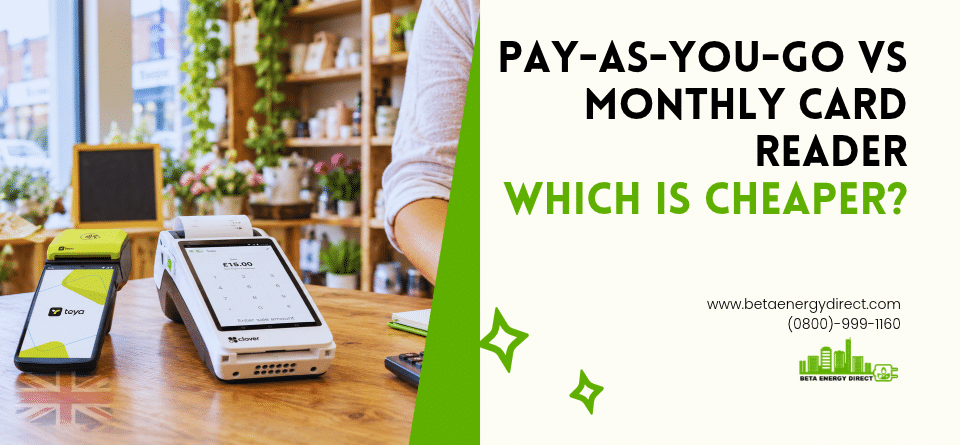
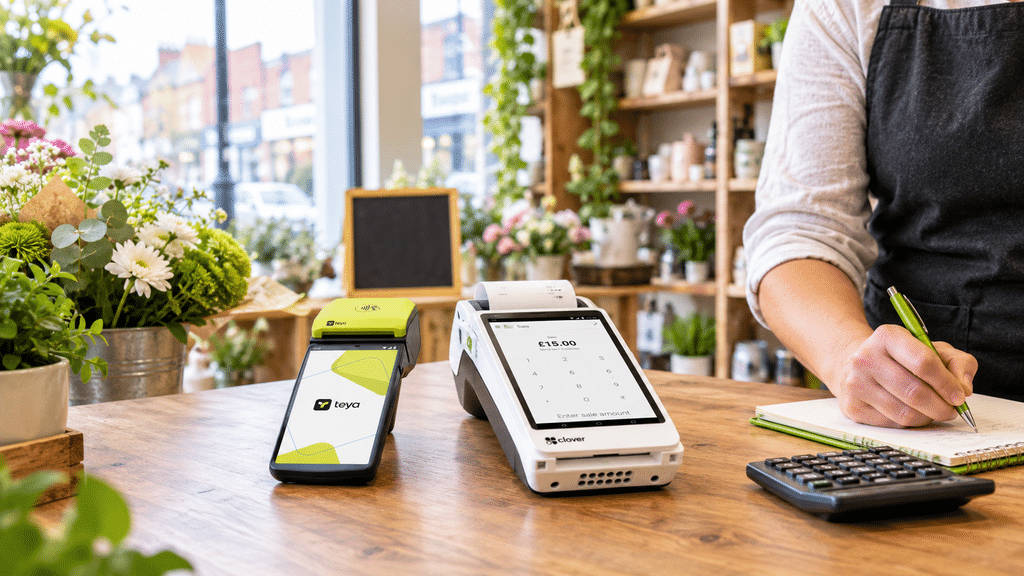
Pay as you go vs monthly card reader
Short answer: it depends on how much you take and how big your average sale is. A pay-as-you-go card reader is almost always cheaper for a small or seasonal business. A monthly contract can be cheaper once your card sales climb, but only if the rate, the fees and the contract length all line up in your favour. Plenty of businesses sign a contract too early, pay rental on a machine that barely works hard enough to justify it, and never notice.
The headline rates make the choice look easy. Pay-as-you-go readers advertise one flat percentage, with no monthly fee. Contract providers advertise lower percentages, then add rental, per-transaction charges and a minimum term. Comparing a flat 1.69% with “from 1.4% plus 5p plus £20 a month” is like comparing two different languages. This guide translates them, shows you the maths, and gives you a simple way to work out which card reader is genuinely cheaper for your business.
The Two Pricing Models in Plain English
Pay-As-You-Go Card Readers
A pay-as-you-go reader charges one flat rate on each card payment, with no monthly fee and no contract. You buy the reader outright, then pay only when you take a payment. If you have a quiet month, you pay almost nothing.
The big names here are SumUp, Square and Zettle by PayPal. Comparison sites checking rates in late summer 2026 put SumUp at 1.69% per in-person transaction, and Square and Zettle at 1.75%. Reader hardware typically costs somewhere between about £19 and £49 plus VAT, depending on the provider and the model, so check the current price before you order.
That simplicity is the appeal. You know exactly what a £40 sale costs you, and there’s nothing to cancel if you stop trading for a season.
Monthly Contract Card Machines
Contract providers work differently. Companies such as Dojo, Worldpay, Takepayments, Handepay and Tyl typically quote each business individually. Comparison sites report lower percentage rates, often starting somewhere around 1.2% to 1.5%, usually with a small per-transaction charge of around 5p on top. In return, you pay monthly terminal rental or a service fee, reported at roughly £15 to £40 a month, and you commit to a minimum term that can run anywhere from 12 to 48 months.
Rates, fees and terms vary a lot between providers and between businesses, so treat those ranges as a guide, not a quote. We’ll come back to why that matters.
The Middle Option: Subscription Plans on Pay-As-You-Go Readers
There’s a third route that gets overlooked. Some pay-as-you-go providers now sell an optional subscription that lowers your rate. For example, SumUp’s paid plan costs around £19 a month and drops the rate on domestic cards to 0.99%, while premium, international and Amex cards stay at 1.69%. You still buy the reader, and there’s no long contract, which makes it a handy stepping stone between the two models.
The Quick Maths: When Does a Monthly Fee Pay for Itself?
The Break-Even Formula
You don’t need a spreadsheet to compare the two. The key question is simple: how much do you need to take each month before a lower rate saves more than the monthly fee costs?
Divide the monthly fee by the difference in rates, and you get your break-even turnover.
Take the SumUp subscription as an example. The fee is £19 a month, and the rate saving is 0.70 percentage points (1.69% minus 0.99%). Divide £19 by 0.007 and you land on roughly £2,700 a month in card sales. Below that, pay-as-you-go wins. Above that, the subscription starts saving you money, assuming most of your customers pay with domestic cards.
Why Your Average Sale Changes Everything
Here’s the part most comparison tables skip. Many contract quotes add a fixed charge of around 5p to every transaction. That small charge hits low-value sales hard, because it’s a bigger slice of a smaller payment.
To show how much this matters, we ran a hypothetical comparison. We pitted a pay-as-you-go rate of 1.69% against a made-up contract built from the published ranges: 1.4% plus 5p per transaction, plus £20 a month. This isn’t a real quote from any provider, but it shows how the maths behaves.
| Average sale | Pay-as-you-go cost per sale | Contract cost per sale | Monthly card sales needed before the contract wins |
|---|---|---|---|
| £10 | 16.9p | 19p | Never, the contract costs more per sale |
| £25 | 42.3p | 40p | Around £22,200 |
| £50 | 84.5p | 75p | Around £10,500 |
| £100 | £1.69 | £1.45 | Around £8,300 |
Look at the top row. If your average sale is £10, a coffee-and-a-pastry business for example, that 5p charge wipes out the whole benefit of the lower percentage. The contract never catches up, however busy you get. At £100 a sale, the picture changes, and the contract starts winning at a much lower monthly volume.
That’s why “which is cheaper” can’t be answered without two numbers: your monthly card turnover and your average transaction value. Pull both from your last three months of statements before you compare anything.
A Worked Example
Say your business takes £15,000 a month on cards, with an average sale of £30, so about 500 transactions.
- Pay-as-you-go at 1.69%: £253.50 a month
- Our hypothetical contract (1.4% plus 5p, plus £20 a month): £210 plus £25 plus £20, so £255 a month
They land within about £1.50 of each other. A negotiated rate below 1.4% would tip it towards the contract. A higher-than-expected mix of premium or international cards would tip it back the other way. It’s closer than most people expect, which is why the fine print matters more than the headline.
Costs That Don’t Show Up in the Headline Rate
A card reader’s real cost is the headline rate plus everything around it. Check each of these before you decide.
International and Premium Cards
Most flat-rate providers charge a higher rate on non-UK cards, and some charge more on premium or Amex cards too. If you serve tourists or business travellers, your real average rate will sit above the advertised one. Check the rate for your own card mix.
Online and Keyed-In Payments
The flat in-person rate doesn’t cover every payment type. Comparison sites report that SumUp charges 2.5% online, and Square charges 1.4% plus 25p for UK cards online. If you take phone orders or payment links, ask what rate applies to those.
Per-Transaction, Refund and Other Fees
Contract providers sometimes add per-authorisation fees, refund fees, statement fees, PCI compliance charges or minimum monthly service charges. One comparison site notes a published refund fee of 50p at one provider, for example. None of these is unreasonable by itself, but they add up. Ask for a full schedule of fees, not just the rate.
Hardware and Rental
Pay-as-you-go readers cost a one-off amount. Contract terminals usually rent monthly, and rental can keep running for the whole term, even if you stop using the machine. If a terminal is described as “free,” ask what’s paying for it.
Payout Speed
How quickly takings reach your bank account affects your cash flow. Providers vary, and some pay out within a day or two while others take longer. If you pay suppliers weekly, that timing matters as much as a few basis points on the rate.
Contract Risk: The Cost You Can’t See on Day One
A lower rate looks great on a quote. But a contract adds a risk that a pay-as-you-go reader never carries: you can get stuck.
Length, Renewal and Exit Fees
Contract terms reportedly run from 12 to 48 months. Some renew automatically if you don’t give notice, and some charge an early termination fee that can run to hundreds of pounds or more. If your business changes, moves, or closes, that fee still applies. A 48-month contract is a serious commitment for a business that might look very different in four years.
What to Get in Writing
Before you sign any contract, ask for the following in writing:
- The exact contract length, and whether it renews automatically
- The early termination fee and how it’s calculated
- Your rate on each card type, not just the headline figure
- Every other fee, including rental, per-transaction, refund, PCI and minimum charges
- Whether the rate can change during the term, and how much notice you’d get
- What happens to the terminal if you leave
If a salesperson makes a verbal promise about any of these, ask for it in the contract. If you’re an eligible micro-business and something goes wrong with a payment service, the Financial Ombudsman Service may be able to help with complaints, and the Financial Conduct Authority regulates payment firms in the UK. The Payment Systems Regulator has also looked closely at how card-acquiring prices are presented to smaller merchants, so it’s reasonable to expect clear, personalised quotes.
Which Option Suits Which Business?
Pay-As-You-Go Usually Suits You If…
- You take under roughly £2,500 to £3,000 a month on cards
- Your average sale is small, say under £20
- Your trade is seasonal, irregular or mobile, such as markets, events or mobile services
- You’re a start-up and your volumes are still unpredictable
- You want zero commitment and the freedom to switch whenever you like
A Monthly Contract Usually Suits You If…
- Your card sales are steady and well above the break-even point for your average sale
- Your average transaction is £50 or more, so that per-transaction charge matters less
- You’ll use the terminal every working day, so rental earns its keep
- You can get a firm, written quote with a clear rate and a sensible contract length
- You’re comfortable committing for the full term
If You’re Somewhere in Between
Plenty of businesses sit in the grey zone, taking £3,000 to £10,000 a month on cards. For those businesses, a subscription plan on a pay-as-you-go reader, or a short-term contract with a clear exit, often gives the best balance of savings and flexibility. And whatever you choose, plan to re-check every year. Your volumes change, and so do provider prices.
A Simple Way to Decide
You can work this out in about half an hour.
- Pull your last three months of card statements. Note your total card sales and your number of transactions.
- Work out your average sale. Divide total sales by the number of transactions.
- Check your card mix. See roughly what share is international, premium, online or keyed-in.
- Get two or three written quotes. Include at least one pay-as-you-go option and one contract option, each based on your real figures.
- Calculate the annual cost of each. Add rate, per-transaction charges, monthly fees, hardware and any other fees, then multiply by 12.
- Check the exit. Add the cost of leaving early to the contract options, and decide how likely you are to need to.
- Pick the cheapest option you’re comfortable with, then diarise a yearly review.
How Beta Energy Direct Helps You Compare Card Readers
At Beta Energy Direct, based in Manchester and working with SMEs and corporates across the UK, we compare business utilities and payment solutions so you don’t have to untangle each provider’s small print. Card readers are a classic example of a market where the cheapest-looking option isn’t always the cheapest in practice.
Our approach gives you:
- Effortless comparison of business card machines and tariffs across the market
- Dedicated, qualified staff who’ll explain rates, fees and contract terms in plain English
- Best prices guaranteed on the deals we recommend
- Less paperwork and quick approvals, so switching doesn’t eat into your trading week
If you’d like a side-by-side comparison based on your actual turnover and average sale, visit our business card terminal page or call us on (0800) 999-1160.
Don’t Stop at Card Fees
Payment costs are only one overhead. If you’re reviewing your card reader, it’s a good moment to look at the rest of your bills too. Many SMEs we help also compare business energy, business water, broadband and telecom and business finance at the same time. Connectivity matters for card payments in particular, since a terminal that depends on weak broadband or mobile signal costs you sales every time it drops out. And if you’d like to see what you could save on energy, get a free business energy quote.
Frequently Asked Questions
Is a pay-as-you-go card reader cheaper than a monthly contract?
For most small and seasonal businesses, yes. Pay-as-you-go readers have no monthly fee, so you only pay when you take payments. A monthly contract starts to win once your card sales are high enough that the lower rate saves more than the monthly fee, and that point depends on your average sale as well as your total turnover.
How much do pay-as-you-go card readers charge per transaction?
Comparison sites checking rates in late summer 2026 report 1.69% for SumUp and 1.75% for Square and Zettle on in-person UK card payments, with no monthly fee. Online and keyed-in payments often cost more, and rates can change, so check the current figure with each provider.
At what monthly turnover does a contract become cheaper?
There isn’t one number. Using a hypothetical contract of 1.4% plus 5p plus £20 a month against a 1.69% flat rate, the crossover ranged from about £8,300 a month at a £100 average sale to about £22,200 at a £25 average sale, and a £10 average sale never reached it. A subscription plan on a pay-as-you-go reader, such as one that charges £19 a month for 0.99% on domestic cards, breaks even at roughly £2,700 a month.
Are there hidden costs with monthly contract card machines?
There can be. Look out for per-transaction and refund fees, PCI or statement charges, minimum monthly service fees, terminal rental that runs for the whole term, automatic renewal and early termination fees. Ask for the complete fee schedule in writing before you sign.
How long are card machine contracts in the UK?
Comparison sites report contract terms ranging from 12 to 48 months, depending on the provider. Check the exact length, the renewal terms and the cost of leaving early before you commit.
Can I pass card fees on to my customers?
For most consumer card payments in the UK, no. Surcharging has been banned since 2018, so processing costs come out of your margin, which is why your rate matters.
Can Beta Energy Direct compare card readers for my business?
Yes. Send us your recent card statements and we’ll compare options based on your real turnover, average sale and card mix. Start with our card terminal service.
The Bottom Line
Pay-as-you-go card readers are usually the cheaper choice for small, seasonal or fast-changing businesses, and monthly contracts can save serious money once your volumes and average sale justify them. The deciding factors are your monthly card turnover, your average transaction value and the contract terms hiding behind the headline rate. Do the sums with your own numbers, get quotes in writing, and don’t let a low percentage distract you from the fees and the exit.
Call Beta Energy Direct on (0800) 999-1160 or visit our business card terminal page to compare card readers for your business today.