- One Stop for all Business Utilities
- (0800) 999-1160
- quotes@betaenergydirect.com

15 Ways UK Businesses Can Reduce Energy Costs in 2026

10 Hidden Business Costs You Can Reduce
July 13, 2026
Why Your Business Energy Bill Just Went Up 13%
July 27, 2026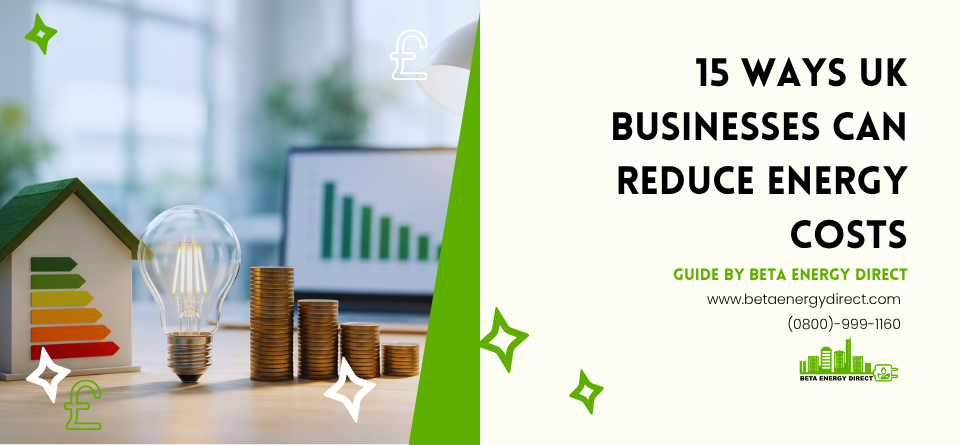
15 Ways UK Businesses Can Reduce Energy Costs in 2026 – Guide by Beta Energy Direct
Energy remains one of the largest operating expenses for businesses across the United Kingdom. Whether you operate a retail store, office, restaurant, warehouse, manufacturing facility, hotel, or healthcare practice, rising commercial energy costs can significantly affect your profitability.
Although wholesale energy markets have become more stable compared with previous years, UK businesses continue to face fluctuating electricity prices, increasing operational costs, and growing pressure to improve energy efficiency.
The good news is that reducing business energy costs doesn’t always require major investments. Many UK SMEs can lower their monthly electricity and gas bills by making smarter purchasing decisions, improving energy efficiency, and regularly reviewing supplier contracts.
In this comprehensive guide, we’ll explore 15 practical ways UK businesses can reduce energy costs in 2026, helping you improve cash flow while supporting long-term business growth.
At Beta Energy Direct, we specialise in helping UK businesses compare business utility suppliers and secure competitive commercial tariffs for electricity, gas, water, telecoms, broadband, merchant services, and business finance.
Whether you’re renewing an existing contract or comparing suppliers for the first time, our experienced consultants simplify the process and help you make informed decisions.
Why Reducing Business Energy Costs Matters
Every pound saved on your energy bills can be reinvested into growing your business.
Lower energy costs can help your business:
- Improve cash flow
- Increase profitability
- Offset inflationary pressures
- Enhance competitiveness
- Invest in staff and technology
- Support long-term sustainability goals
According to Ofgem, businesses should regularly review their energy contracts and understand the terms before renewing to avoid unnecessary costs.
Likewise, the Energy Saving Trust recommends implementing practical energy efficiency measures to reduce commercial energy consumption and lower operating expenses.
Understanding Business Energy Costs
Before exploring cost-saving strategies, it’s helpful to understand what makes up your business energy bill.
Typically, commercial energy costs include:
- Unit rate for electricity or gas
- Standing charges
- VAT
- Network costs
- Environmental levies
- Metering charges
Many businesses focus solely on unit prices, but reviewing your overall tariff structure often reveals additional opportunities to save.
One of the easiest ways to begin is by comparing suppliers rather than accepting automatic contract renewals.
👉 Compare Business Energy Suppliers
1. Compare Business Energy Suppliers Before Your Contract Ends
One of the biggest mistakes businesses make is allowing their energy contracts to automatically renew.
Many suppliers place businesses onto expensive rollover tariffs if contracts aren’t reviewed before expiry.
Instead, begin comparing suppliers around 3–6 months before your renewal date.
Benefits include:
- Lower unit rates
- Better contract flexibility
- Access to exclusive business tariffs
- Improved customer support
- More predictable operating costs
Working with an experienced commercial energy broker allows businesses to compare multiple suppliers without spending hours researching the market.
Why Choose Beta Energy Direct?
Our specialists compare commercial electricity suppliers across the UK to identify competitive business energy contracts tailored to your business needs.
Related Service
2. Choose the Right Business Energy Contract
Not every business requires the same type of contract.
Choosing between fixed and variable tariffs can significantly impact your annual energy expenditure.
Fixed Business Energy Contracts
Ideal for businesses seeking:
- Budget certainty
- Protection against rising prices
- Predictable monthly bills
Variable Business Energy Contracts
Suitable for businesses comfortable with market fluctuations and potential short-term savings.
Before signing any agreement, compare:
- Contract length
- Standing charges
- Exit fees
- Renewable energy options
- Supplier reputation
If you’re unsure which option is best, consulting an independent broker can help you evaluate the most cost-effective solution.
3. Conduct a Business Energy Audit
Many businesses underestimate how much energy they waste every day.
An energy audit identifies where electricity and gas are being consumed unnecessarily.
Common areas include:
Lighting
Old fluorescent lighting often consumes significantly more electricity than modern LED alternatives.
Heating and Cooling
Poor thermostat settings can dramatically increase energy bills.
Office Equipment
Computers, printers, and monitors left running overnight contribute to unnecessary consumption.
Refrigeration
Restaurants and hospitality businesses should regularly maintain refrigeration equipment to improve efficiency.
Once waste is identified, businesses can implement targeted improvements with measurable savings.
4. Upgrade to LED Lighting
Lighting accounts for a considerable proportion of electricity consumption in many commercial premises.
Switching to LED lighting remains one of the fastest ways to reduce business electricity costs.
Benefits include:
- Up to 80% lower electricity usage
- Longer product lifespan
- Reduced maintenance
- Improved workplace lighting
- Lower carbon emissions
Adding occupancy sensors in meeting rooms, toilets, storage areas, and corridors can further reduce unnecessary energy consumption.
The Energy Saving Trust recommends LED upgrades as one of the quickest returns on investment for commercial buildings.
5. Monitor Energy Usage with Smart Metering
You cannot manage what you cannot measure.
Modern smart meters provide businesses with real-time information about energy consumption.
Benefits include:
- Accurate billing
- Identification of peak usage
- Better budgeting
- Faster detection of unusual consumption
- Improved energy management
Businesses using smart meters often discover opportunities to reduce waste simply by understanding when electricity usage is highest.
Combining smart metering with energy monitoring software can provide even greater insights.
The Importance of Reviewing Business Utility Contracts
While electricity often receives the most attention, many businesses overlook savings available across other essential utilities.
Reviewing multiple services at the same time often produces greater overall savings.
These include:
Business Gas
Competitive gas contracts can significantly reduce heating costs for commercial properties.
👉 Business Gas Solutions
Business Broadband & Telecom
Modern fibre broadband and cloud-based communication systems improve productivity while reducing operating costs.
Business Mobile Phones
Flexible business mobile contracts help companies manage communication costs more efficiently.
👉 Business Mobile Phone Solutions
Expert Tip
Many UK businesses focus solely on reducing electricity prices while overlooking savings available through bundled business utility comparisons.
By reviewing your business energy, gas, water, telecom, and mobile services together, you may achieve greater overall savings while simplifying supplier management.
At Beta Energy Direct, we make this process straightforward by helping businesses compare multiple utility providers under one roof.
6. Optimise Your Heating and Cooling Systems
Heating and cooling systems account for a significant portion of commercial energy consumption, particularly in offices, retail stores, hospitality businesses, warehouses, and healthcare facilities.
Many businesses waste energy simply because HVAC systems are outdated or poorly maintained.
Practical Ways to Reduce Heating and Cooling Costs
Schedule Regular Maintenance
Dirty filters, blocked vents and ageing components force systems to work harder, increasing electricity consumption.
A simple maintenance schedule can improve efficiency while extending equipment life.
Install Smart Thermostats
Smart thermostats automatically adjust temperatures based on occupancy and working hours.
Benefits include:
- Reduced energy waste
- Lower electricity bills
- Improved employee comfort
- Better temperature control
Avoid Heating Empty Spaces
Only heat or cool occupied areas whenever possible.
Meeting rooms, storage rooms and unused offices should not consume unnecessary energy.
7. Reduce Peak-Time Electricity Usage
Electricity prices can vary depending on demand and your contract structure.
Businesses that reduce consumption during peak periods often lower their overall energy costs.
Examples of Peak-Time Management
- Run heavy equipment outside peak hours.
- Charge electric vehicles overnight where appropriate.
- Schedule manufacturing during off-peak periods.
- Delay non-essential energy-intensive activities.
Even small adjustments can reduce annual electricity costs.
8. Invest in Energy-Efficient Equipment
Older equipment generally consumes considerably more electricity than modern alternatives.
Although replacing equipment requires investment, the long-term savings often justify the cost.
Consider upgrading:
- Office computers
- Commercial refrigeration
- HVAC systems
- Lighting
- Industrial machinery
- Kitchen equipment
- Water heaters
When purchasing new equipment, always compare its energy efficiency rating.
According to the UK Government’s energy guidance, investing in efficient technologies helps businesses reduce both costs and carbon emissions.
9. Encourage Employees to Save Energy
Technology alone won’t reduce your bills.
Employee behaviour plays a major role in overall energy consumption.
Simple workplace habits can generate meaningful savings.
Encourage Staff To:
- Turn off lights when leaving rooms.
- Shut down computers at the end of the day.
- Switch off unused monitors.
- Avoid unnecessary heating.
- Report faulty equipment.
- Close windows when heating is operating.
Creating an energy-conscious workplace culture costs very little but delivers long-term benefits.
10. Generate Your Own Renewable Energy
More UK businesses are investing in renewable energy to reduce dependence on traditional suppliers.
Solar panels have become increasingly attractive due to falling installation costs and improved efficiency.
Benefits include:
- Lower electricity bills
- Reduced exposure to wholesale price fluctuations
- Lower carbon emissions
- Enhanced environmental credentials
For businesses with suitable roof space, renewable energy can deliver substantial long-term savings.
11. Improve Building Insulation
Poor insulation forces heating systems to work harder.
Heat escapes through:
- Roofs
- Walls
- Windows
- Doors
- Loading bays
Improving insulation can significantly reduce gas and electricity consumption.
Practical improvements include:
- Double glazing
- Door seals
- Roof insulation
- Wall insulation
- Automatic closing doors
Many businesses recover these investments through lower energy bills.
12. Reduce Business Gas Costs
Electricity often receives most of the attention, but commercial gas costs can also have a major impact—especially for:
- Restaurants
- Hotels
- Manufacturers
- Warehouses
- Schools
- Healthcare providers
Ways to Lower Business Gas Bills
- Compare suppliers before renewal.
- Service boilers annually.
- Upgrade inefficient heating systems.
- Improve insulation.
- Install programmable heating controls.
- Monitor gas usage regularly.
Compare Business Gas Suppliers
Reviewing your gas contract before it expires can help you secure more competitive commercial tariffs.
👉 Business Gas Solutions
13. Review All Business Utility Contracts Together
Many businesses compare electricity prices but overlook savings available across other essential services.
Conducting a complete utility review often delivers greater overall savings.
Consider comparing:
Business Electricity
Find competitive commercial electricity tariffs tailored to your business.
👉 https://www.betaenergydirect.com/business-energy/
Business Water
Since deregulation, many businesses in England can choose their water supplier.
Comparing suppliers could reduce ongoing operating costs.
👉 https://www.betaenergydirect.com/business-water/
Business Broadband
Reliable, high-speed broadband improves productivity while reducing downtime.
👉 https://www.betaenergydirect.com/business-telecom/
Business Mobile Phones
Reviewing mobile contracts ensures you’re not paying for unnecessary services.
👉 https://www.betaenergydirect.com/business-mobile-phones/
Merchant Card Machines
Payment processing fees quietly reduce profits every day.
Modern payment terminals often provide:
- Faster transactions
- Better reporting
- Lower processing fees
- Improved customer experience
👉 https://www.betaenergydirect.com/business-card-terminal/
Business Finance
Improved cash flow enables businesses to invest in energy-efficient technology without disrupting daily operations.
👉 https://www.betaenergydirect.com/business-finance/
14. Monitor Energy Performance Every Month
Reducing energy costs isn’t a one-time exercise.
Successful businesses monitor energy performance throughout the year.
Review:
- Monthly electricity consumption
- Gas usage
- Standing charges
- Unit rates
- Seasonal trends
- Supplier invoices
Tracking these figures helps identify unusual increases before they become expensive problems.
Many businesses create monthly energy reports as part of their financial management process.
15. Develop a Long-Term Energy Management Strategy
Businesses that consistently reduce energy costs usually follow a structured energy management plan.
An effective strategy should include:
Annual Contract Reviews
Avoid automatic renewals.
Compare suppliers before every renewal period.
Energy Efficiency Targets
Set measurable objectives such as:
- Reduce electricity usage by 10%
- Lower gas consumption
- Improve equipment efficiency
Staff Engagement
Make energy efficiency part of your workplace culture.
Regular reminders and training encourage consistent energy-saving habits.
Technology Investment
Plan future investments in:
- LED lighting
- Smart meters
- Solar energy
- Efficient heating systems
- Cloud-based monitoring
Long-term planning creates sustainable savings year after year.
Bonus Tips for Reducing Business Energy Costs
Replace Traditional Lighting
Switch all remaining fluorescent or halogen lighting to LEDs.
Reduce Standby Power
Many appliances continue consuming electricity overnight.
Turn equipment off completely whenever possible.
Schedule Equipment Maintenance
Well-maintained equipment performs more efficiently and lasts longer.
Monitor Seasonal Energy Usage
Compare winter and summer consumption patterns to identify improvement opportunities.
Benchmark Against Previous Years
Review annual energy data to measure progress and identify new savings opportunities.
Frequently Asked Questions (FAQs)
1. How can UK businesses reduce energy costs in 2026?
Businesses can reduce energy costs by comparing suppliers before contract renewal, upgrading to energy-efficient equipment, installing LED lighting, using smart meters, improving insulation, reducing peak-time energy usage, and regularly reviewing business utility contracts.
2. When is the best time to switch business energy suppliers?
The ideal time is 3 to 6 months before your existing contract expires. This gives you enough time to compare suppliers, negotiate better commercial energy tariffs, and avoid expensive rollover contracts.
👉 Compare Business Energy Prices
3. Should I choose a fixed or variable business energy contract?
A fixed business energy contract offers predictable costs and protects against market price increases, making it ideal for most SMEs.
A variable contract may offer savings when wholesale prices fall but exposes businesses to market fluctuations.
4. Can switching business energy suppliers interrupt my electricity supply?
No.
Switching suppliers is an administrative process. Your electricity or gas supply continues without interruption while the new supplier manages the transfer.
5. How often should businesses compare utility suppliers?
Experts recommend reviewing all business utility contracts every 12 months and starting comparisons several months before renewal.
6. What other business utilities should I compare?
Many businesses save money by reviewing:
- Business Electricity
- Business Gas
- Business Water
- Business Broadband
- Business Telecom
- Business Mobile Phones
- Merchant Card Machines
- POS Systems
- Business Finance
A complete utility review often delivers greater savings than focusing on electricity alone.
7. Are renewable business energy tariffs more expensive?
Not necessarily.
Many renewable electricity tariffs are now competitively priced and may help businesses achieve their sustainability objectives while maintaining cost efficiency.
8. Why should I use an independent business utility broker?
An independent broker compares multiple suppliers on your behalf, helping you:
- Save time
- Compare competitive tariffs
- Understand contract terms
- Reduce paperwork
- Secure suitable business utility solutions
Common Business Energy Mistakes to Avoid
Even well-managed businesses sometimes miss opportunities to reduce costs.
Avoid these common mistakes:
Waiting Until Your Contract Expires
Leaving comparisons until the last minute reduces your negotiating power.
Automatically Renewing Existing Contracts
Many businesses unknowingly pay higher rates by accepting automatic renewals.
Ignoring Standing Charges
The lowest unit rate doesn’t always mean the cheapest overall contract.
Always compare:
- Unit rates
- Standing charges
- Contract length
- Exit fees
- Supplier support
Focusing Only on Electricity
Reviewing gas, water, broadband, telecom, and payment services together often delivers significantly greater savings.
Failing to Monitor Energy Usage
Without monitoring, businesses cannot identify unnecessary energy waste.
Why Compare Business Utilities with Beta Energy Direct?
Managing multiple suppliers can be time-consuming.
At Beta Energy Direct, we simplify the comparison process by helping UK businesses compare trusted suppliers across a wide range of commercial services.
Our Services
⚡ Business Energy
🔥 Business Gas
💧 Business Water
🌐 Business Broadband
☎ Business Telephone Systems
📱 Business Mobile Phones
☁ VoIP Solutions
💳 Merchant Card Machines
🖥 Point of Sale (POS) Systems
💼 Business Finance
Whether you’re a startup, growing SME, or established organisation, our experienced advisors work to find solutions that match your business requirements.
Why Businesses Choose Beta Energy Direct
✔ Compare Multiple Suppliers
✔ Dedicated UK-Based Support
✔ Competitive Business Tariffs
✔ Fast, Simple Switching Process
✔ Less Paperwork
✔ Quick Approvals
✔ Tailored Business Utility Solutions
✔ Expert Guidance Throughout the Process
Final Thoughts
Reducing business energy costs isn’t about making one major change—it’s about making several smart decisions that work together.
Reviewing contracts, improving energy efficiency, adopting modern technology, and comparing suppliers regularly can significantly reduce operating costs while improving profitability.
Many businesses unknowingly spend more than necessary because they remain on outdated contracts or fail to compare suppliers before renewal.
By taking a proactive approach in 2026, UK SMEs can protect themselves from rising operating costs while improving long-term financial stability.
Whether you’re looking to lower electricity bills, compare business gas suppliers, improve broadband performance, or reduce payment processing costs, reviewing your utilities annually is one of the smartest financial decisions your business can make.
Ready to Reduce Your Business Energy Costs?
Let Beta Energy Direct help you compare trusted suppliers and find competitive business utility solutions.
We Compare
✅ Business Energy
✅ Business Gas
✅ Business Water
✅ Business Broadband
✅ Business Telecom
✅ Business Mobile Phones
✅ Merchant Card Machines
✅ Business POS Systems
✅ Business Finance
Get Started Today
🌐 Website
⚡ Compare Business Energy
🔥 Business Gas
🌐 Business Telecom
📱 Business Mobile Phones
💼 Business Finance
⚡ Get a Free Energy Quote
📞 Call Our UK Experts
0800 999 1160